
Spanning the fertile plains of northern Bihar and southeastern Nepal lies Mithila, an ancient cultural cradle where women have practiced Madhubani painting for over three millennia. Traditionally painted during weddings, child blessings, and seasonal festivals on the freshly plastered mud walls of bridal chambers (Kohbar Ghar), Madhubani is renowned worldwide for its hypnotic double-outline linework, vibrant mineral pigments, and refusal to leave any part of the canvas empty.
1. The Three Classical Stylistic Branches
Madhubani encompasses five distinct styles, with three primary artistic branches reflecting the cultural heritage of different artisan guilds:
- Bharni (Color-Filled Splendor): Characterized by bold, rich pigment fills depicting mythological epics, celestial deities, and lush nature. Colors are vibrant and flat, enclosed within crisp ink borders.
- Kachni (Intricate Monochrome Linework): Focuses almost exclusively on fine, monochromatic hatching and stippling using delicate black, vermilion, or sepia inks. Hatching lines (kachni strokes) are executed with mathematical density to build texture, volume, and movement without solid color fills.
- Godna (Tattoo & Protective Geometry): Rooted in ancient body ornamentation and tribal protective marks. It uses concentric circles, rows of stylized birds, bamboo reeds, and sacred amulets painted in rhythmic rows.
2. Botanical Pigments and Natural Chemistry
Authentic Mithila painters historically extracted their entire color spectrum directly from local flora and minerals:
- Kajal (Soot Black): Collected by holding a brass lamp over burning mustard oil, mixed with raw cow's milk or gum arabic.
- Haldi (Golden Yellow): Fresh turmeric root ground with lime water creates brilliant yellows and warm oranges.
- Neel (Deep Indigo): Fermented leaves of the Indigofera tinctoria plant yield timeless sky and ocean blues.
- Palash & Kusumi (Vermilion & Crimson): Extracted from the dried petals of the flame-of-the-forest (Palash) tree.
- Saag (Emerald Greens): Juices pressed from tender wood-apple leaves, spinach, and wild marigold foliage.
3. Horror Vacui: The Sacred Fullness of the Canvas
One of Madhubani’s most striking visual characteristics is the complete absence of negative space — a concept art historians call horror vacui (fear of empty space). In Mithila cosmology, emptiness signifies absence and vulnerability, whereas a canvas bursting with life invites divine fertility and auspicious abundance.
Whenever a main subject — such as a dancing peacock or a sacred tree — is drawn, every remaining square inch of the canvas is painstakingly filled with tiny birds, creeping flowering vines, sunbursts, and fish swimming through water. This aesthetic principle creates a rich, textured visual fabric where every element is interconnected.
4. Key Symbolic Motifs to Use in Your Art
- The Sacred Fish (Matsya): Represents fertility, prosperity, and the life-giving vitality of water.
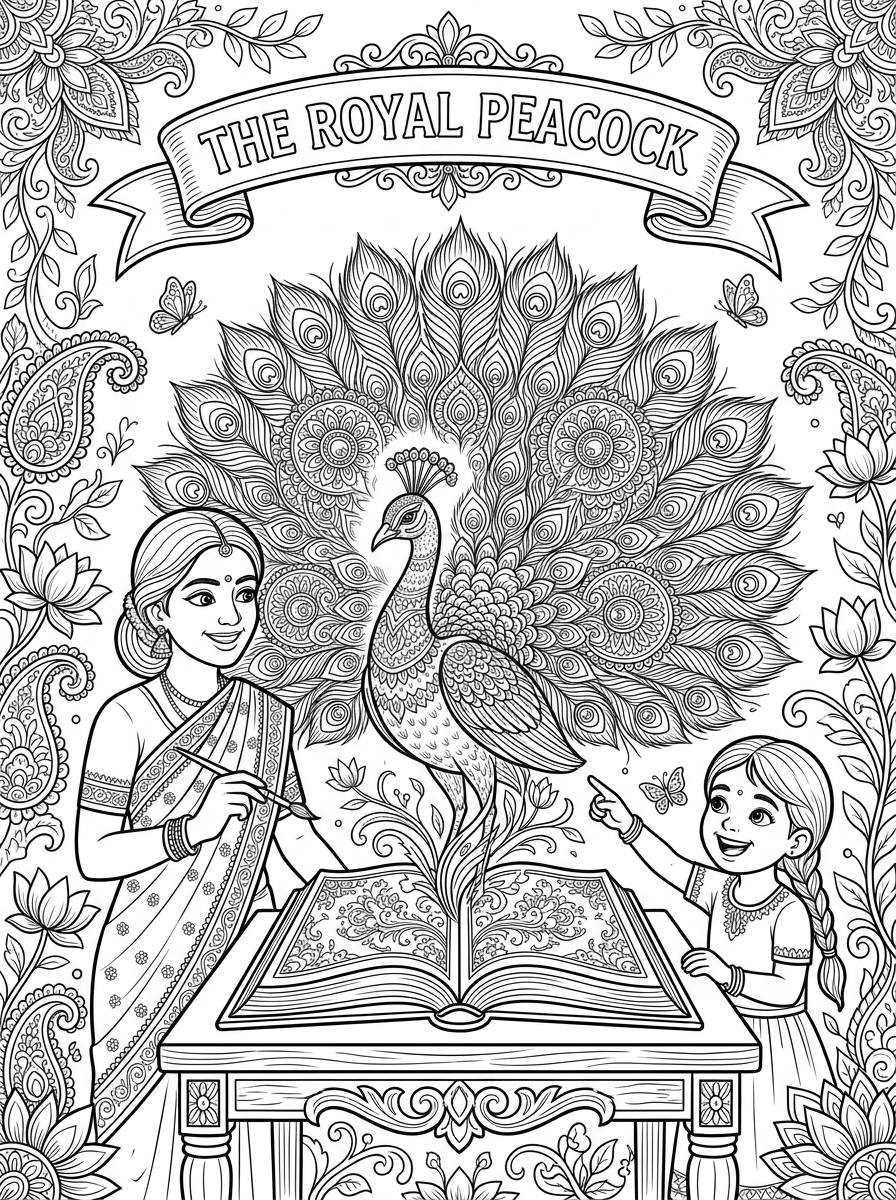
- The Royal Peacock (Mayura): Symbolizes romantic devotion, protective watchfulness, and the celebration of monsoon showers.
- The Lotus (Kamala): Signifies purity of creative consciousness rising untouched above worldly mud.
- The Sun & Moon (Surya-Chandra): Represent balanced cosmic energy, light, and longevity.
"A blank canvas is an open door; when we fill it with flowers and birds, we invite joy to cross the threshold."